Published on February 5, 2026
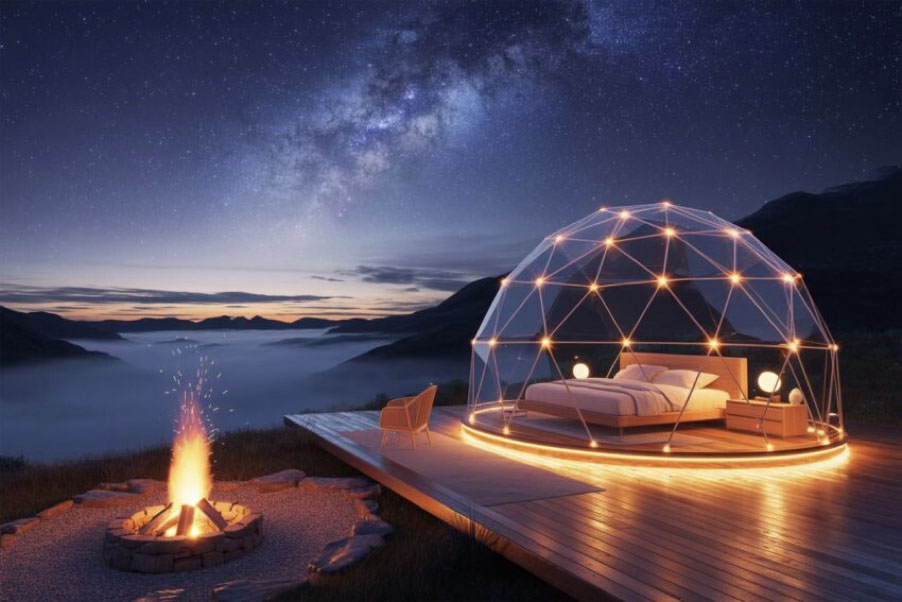
The days when “camping” meant shivering in a leaky nylon tent and struggling with a portable stove are rapidly fading into the rearview mirror. A new era of outdoor hospitality has arrived, and it’s draped in luxury linens. According to recent industry data, the global glamping market is on an explosive trajectory, projected to reach a staggering USD 7.36 billion by 2032, growing at a compound annual growth rate (CAGR) of 10.27%. What was once a niche lifestyle choice has evolved into a powerhouse sector of the global tourism industry. Driven by a potent mix of social media “aspirationalism,” a global shift toward wellness, and an urgent demand for sustainable travel, glamping is no longer just a trend—it’s the future of how we vacation.
The Numbers Behind the Nature
In 2024, the glamping market was valued at a respectable USD 3.40 billion. However, the leap to over $7 billion in less than a decade signals a fundamental shift in consumer behaviour. This growth isn’t just coming from seasoned hikers looking for a softer bed; it’s being fuelled by “high-income travellers,” families, and a massive wave of millennials and Gen Z explorers who value experiences over possessions.
The “Instagram Effect”: Nature as a Backdrop
It is impossible to discuss the rise of glamping without acknowledging the role of social media. Platforms like Instagram, TikTok, and YouTube have transformed remote landscapes into viral destinations. Travel influencers and content creators have turned “stargazing domes” and “safari-style tents” into digital status symbols. For the modern traveller, a vacation is only as good as the photos it produces. Glamping offers a visually stunning, curated aesthetic that traditional hotels often lack. Whether it’s a mirror-glass cabin in the Swedish woods or a luxury yurt in the American Southwest, these sites provide the “Instagrammable” moments that drive bookings. In fact, many travellers now discover their next destination through a reel rather than a travel agent.
Wellness Tourism: Finding Peace in the Wild
Beyond the aesthetics, there is a deeper, more psychological driver behind the glamping boom: the “wellness” movement. In a post-pandemic world characterized by burnout and digital fatigue, the “Great Outdoors” has become the ultimate pharmacy.
Modern glamping sites are increasingly integrating holistic health into their business models. We are seeing a surge in:
- Yoga Domes and Meditation Tents: Dedicated spaces for mindfulness amidst nature.
- Forest Bathing: Guided sessions based on the Japanese practice of Shinrin-yoku.
- Spa Lodges: High-end treatments in remote, off-grid locations.
This “wellness-centric” approach caters to travellers seeking mental rejuvenation and stress relief. It turns a simple weekend away into a restorative retreat, justifying the premium price tags associated with luxury camping.
The Sustainability Mandate
As the climate crisis becomes a central concern for travellers, glamping has emerged as the “green” alternative to traditional high-impact resorts. Many glamping operators lead the charge in eco-friendly hospitality, utilizing:
- Low-impact construction: Modular cabins and tents that leave no permanent footprint.
- Renewable energy: Solar-powered pods and off-grid water filtration.
- Locally sourced materials: Supporting rural economies while reducing carbon footprints.
Environmentally conscious travellers are increasingly voting with their wallets, choosing stays that align with their values. Glamping offers a way to enjoy the world’s beauty without contributing to its degradation.
Regional Growth: Asia-Pacific Takes Center Stage
While North America and Europe currently hold significant market shares, the Asia-Pacific region is expected to witness the fastest growth through 2032. Rising middle-class incomes in countries like India, China, and Australia, combined with a growing interest in experiential travel, are creating fertile ground for new glamping developments. Governments in these regions are also recognizing glamping as a way to boost rural tourism and create jobs without the need for massive, destructive infrastructure.
The Challenges Ahead
Despite the glowing forecast, the industry faces hurdles. The initial investment cost for a high-end glamping site—complete with private bathrooms, climate control, and gourmet dining—is significantly higher than traditional camping. Furthermore, seasonality remains a challenge for operators in colder climates, though the rise of “four-season” cabins and insulated pods is beginning to mitigate this issue.
Conclusion: A Mainstream Shift
By 2032, glamping will likely be a mainstream segment of the hospitality industry, rivalling traditional luxury hotels. The data is clear: travellers are looking for more than just a room; they are looking for a story. They want to wake up to the sound of birds, watch the stars from a king-sized bed, and know that their stay isn’t harming the planet. As we move toward a $7.36 billion future, the message to hospitality providers is simple: the walls are coming down, and the luxury of the future is found in the wild.